



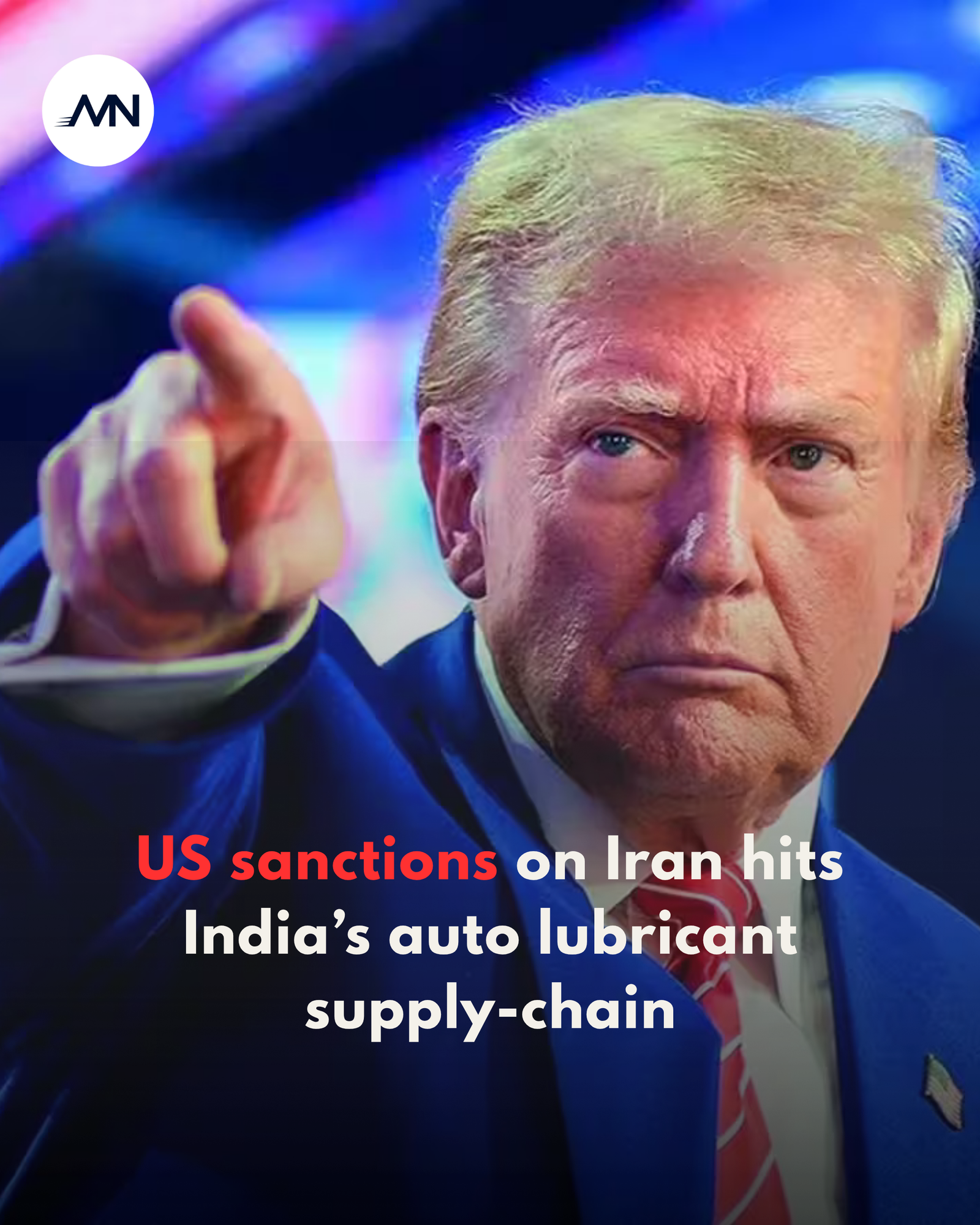
The latest round of American sanctions has rippled far beyond Tehran, unsettling the lower rungs of India’s automotive supply chain. Under “Operation Economic Outcast,” Washington has blacklisted four India-based trading and logistics firms—including PP Softtech Private Limited and Sadashiva Overseas Limited—for facilitating imports of Iranian petroleum and petrochemical products. Though these companies are not themselves manufacturers, they have long acted as conduits for discounted raw materials entering the subcontinent.

At the core of the disruption are base oils and petrochemical feedstocks. Independent Indian trading houses had relied on steeply discounted Iranian distillates to buffer against global commodity volatility. These inputs are essential for producing lubricants, transmission fluids, and synthetic rubbers—the everyday consumables that keep India’s two-wheeler fleets and commercial transport running. With the supply channels abruptly cut, secondary blenders and formulators must now turn to standard-priced imports from East Asia and the Middle East, eroding their margin cushions.
Industry analysts suggest that major automakers, with diversified sourcing from institutional refineries, will weather the storm. But the replacement parts sector—where cost sensitivity is paramount—faces sustained price pressures. Lubricants and synthetic components are expected to see moderate but persistent upticks as the replacement premium for non-sanctioned base oils filters down to consumers.
The sanctions also introduce administrative friction. Heightened compliance checks at Indian ports mean bulk chemical shipments are subject to delays. While individually minor, these bottlenecks accumulate into systemic inefficiencies that weigh on manufacturers already grappling with global supply chain turbulence.
The broader picture is one of recalibration. India’s manufacturing base, already contending with semiconductor shortages and shifting trade alignments, must now adapt to the geopolitical weaponisation of energy flows. The sanctions underscore a structural vulnerability: dependence on discounted raw materials from politically volatile sources.
Edit Note
For policymakers and industry strategists, the message is stark. Competitive manufacturing cannot rest on opportunistic arbitrage of sanctioned commodities. India must accelerate efforts to secure stable petrochemical supply chains, diversify inputs, and invest in domestic defining capacity. The lubricant may have lost its discount, but the machinery of India’s industrial ambitions cannot afford to stall.
 ‘EVs Smash Records in July With 330,000 Units Sold’